Fence-Line Clearing
Expose an existing fence row, improve inspection access and reduce vegetation crowding the boundary. Property corners, wire, posts, gates, utilities and neighboring land must be identified before equipment enters the area.
Northern Kentucky & Cincinnati Tri-State
Open overgrown boundaries, reconnect wooded routes and create practical access with a clearly marked path and an honest plan for the ground beneath it.
Clear a Route With a Purpose
Fence-line and trail clearing is most useful when the route has a defined job. It may help a property owner inspect fence posts, reach a rear field, reconnect pond access, create a maintenance path or reopen an established trail narrowed by honeysuckle, briars and saplings.
Starrett uses the Bobcat T770 and forestry-mulching equipment for suitable vegetation and ground conditions. Before work begins, the owner identifies the true boundary, anything that must remain and the intended width and destination. That turns a broad request to “open it up” into a route that can be walked, photographed and quoted.
Choose the Route Type
Both services process overgrowth, but the hazards, finish and future use can be different. A better quote starts with which route you need and why you need it.
Expose an existing fence row, improve inspection access and reduce vegetation crowding the boundary. Property corners, wire, posts, gates, utilities and neighboring land must be identified before equipment enters the area.
Reclaim a route that has narrowed or disappeared beneath seasonal growth. Show the original path, tight turns, slopes, washouts, low limbs and the places where the trail should begin and end.
Plan a new path to a field, pond, rear acreage or maintenance point. The requested width, grade, turning room, overhead clearance, drainage and retained trees determine whether the route is suitable for the machine.
Connect several destinations without treating every acre as a full-clear project. A boundary route, interior trail and selected pond approaches can create usable access while leaving other areas outside the approved scope.
Authentic Starrett Clearing Work
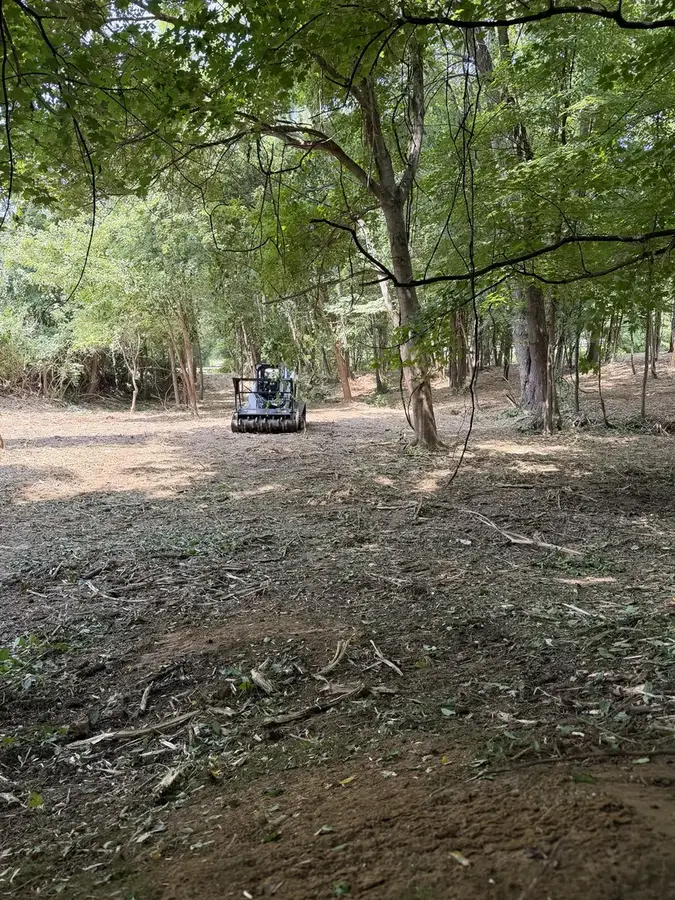
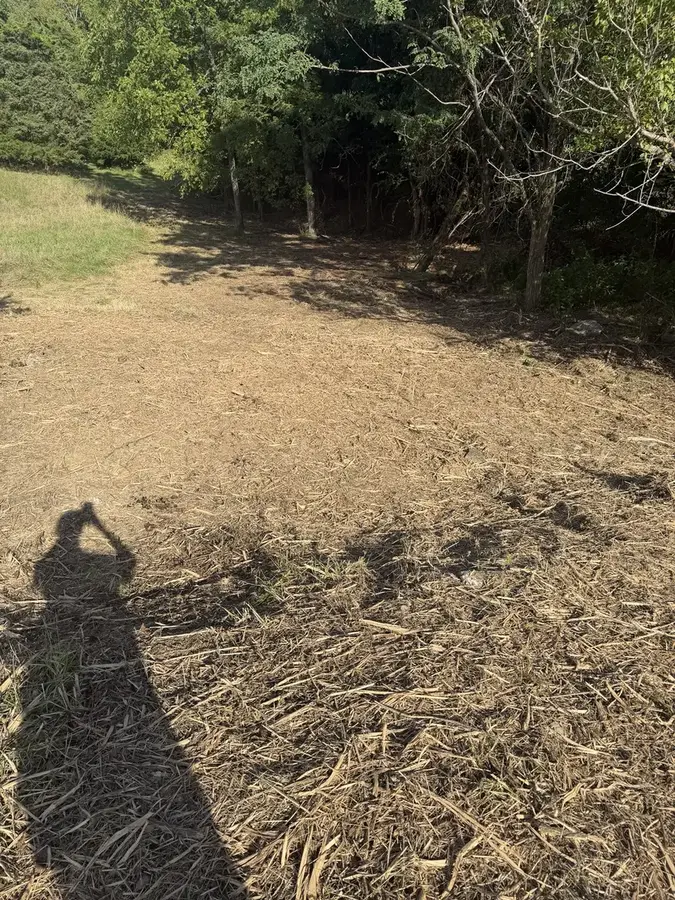
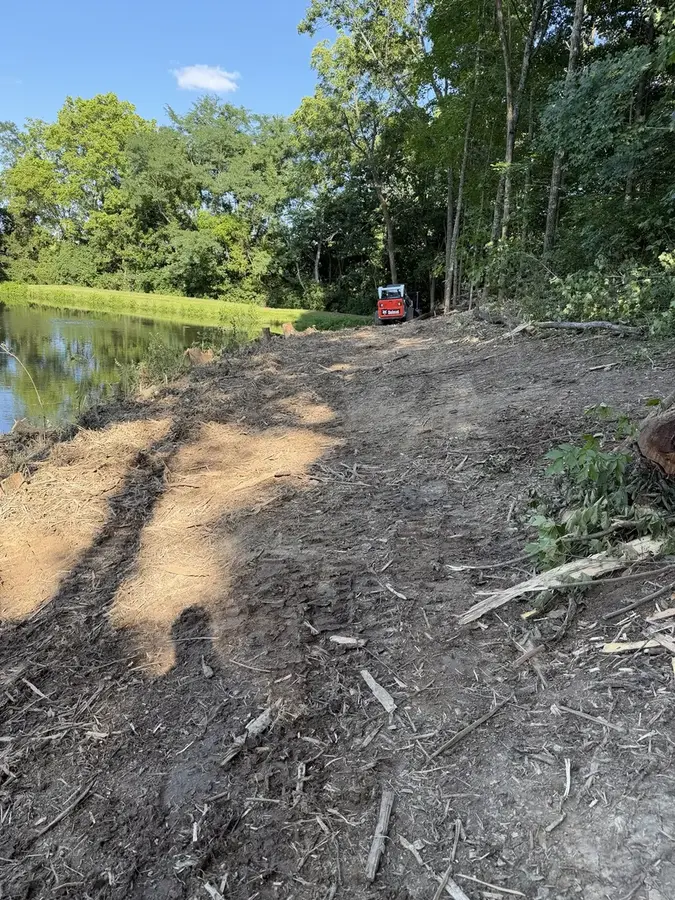
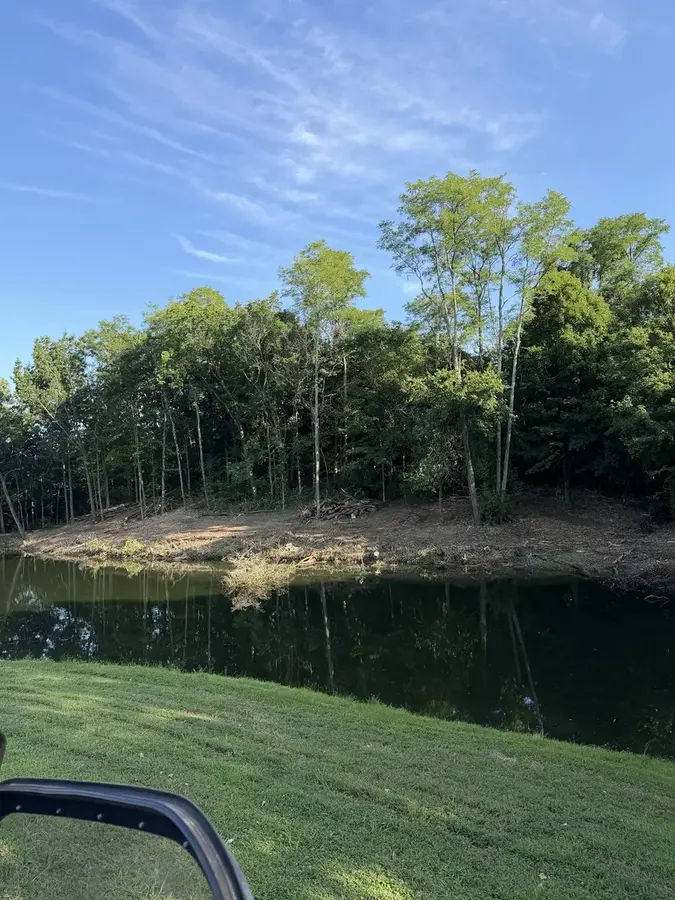
These are real Starrett clearing photos from projects across the service area. They are not stock images and are not presented as photos from the 43-acre project. They show the type of vegetation, machine access and mulched surface that help another owner discuss a realistic scope.
A completed route can look different depending on density, terrain, soil, stumps and the number of passes. Photos help explain the process, but the actual property controls the quote and finished result.
Verified Forestry-Mulching Rates
Starrett reviews density, terrain, access, hidden obstacles and the requested finish before confirming the applicable rate. Route length alone does not predict machine time.
The confirmed rate includes the Bobcat T770, forestry-mulching attachment, fuel, routine machine operating costs and an experienced owner-operator. Local mobilization is included within 20 miles of California, Kentucky. Travel beyond 20 miles and added services are quoted before scheduling.
Verified Large-Property Proof
Starrett completed a fence-line trail, clearing around three pond areas and an interior route to the rear pond on one 43-acre property. The scope is published without exposing the customer’s location, address, price or private details.
That project demonstrates a useful planning principle: name the destinations first. Instead of assuming every acre needs the same treatment, the owner can prioritize the boundary, water access, rear acreage and the routes connecting them. Another property will still require its own review because vegetation, terrain, wire, soil and desired finish change production.
Fall & Cooler-Weather Planning
After vegetation drops, owners may be able to see old fence wire, posts, washed areas, slopes, rocks, discarded material and the shape of an established path more clearly. Fall can be a practical time to walk boundaries, flag a route and plan access for future maintenance, hunting or spring property work. Safe scheduling and production still depend on weather, soil and equipment access.
Locate corners, gates, posts, wire and neighboring property while dense leaves are less likely to hide the boundary.
Flag drop-offs, soft ground, culverts, rocks, utilities, debris and anything the machine must avoid.
Use improved access to evaluate later grading, stump work, demolition, drainage or broader land clearing.
Before the Machine Arrives
Good preparation protects the property and gives Starrett better information before quoting. Do not rely on an unmarked boundary or assume abandoned wire will be visible from the machine.
Photograph road access, gate width, turns, overhead clearance, bridges, culverts and the surface the Bobcat must cross.
Mark the true property line, fence wire, utilities, septic components, neighboring land and every tree or object that must remain.
State the route length, desired width, destinations and future use. Explain whether mulch may remain and whether added grading or hauling is requested.
Realistic Finished Expectations
Forestry mulching processes approved vegetation at or near ground level and normally leaves organic material across the route. It does not automatically remove every root, larger stump, buried object, rock or piece of wire. A mulched route can improve access and visibility, but it is not the same as an engineered stone lane, compacted driveway or finished lawn.
Standing trees larger than 10 inches in diameter are outside Starrett’s standard forestry-mulching scope. Unstable trees, hazardous material and work near structures or utilities may need a separate provider or safety plan. Existing honeysuckle can be processed, but roots, seed and neighboring vegetation may cause regrowth, so follow-up maintenance may still be needed.
Connected Property Services
Address dense invasive growth, briars and overgrown edges around the route. Regrowth expectations and maintenance should be part of the property plan.
Where conditions permit, rough grading, material handling and access work can be reviewed separately after vegetation is opened.
An opened route may reveal an unwanted shed, fence, mobile home or accumulated debris. Teardown, hauling and cleanup are separately scoped services.
Choose crew-loaded junk removal when Starrett should do the lifting, or a 15-yard dumpster when you want time to load approved material yourself.
Fence-Line & Trail FAQs
How much does clearing cost?
Verified forestry-mulching rates are $250, $275 or $300 per hour based on conditions, each with the applicable four-hour minimum. Travel beyond 20 miles from California, Kentucky and added services are quoted separately.
Can Starrett work beside an existing fence?
Yes when the boundary, wire, posts, gates, utilities, neighboring property and safe machine route are clearly identified. Hidden or abandoned wire must be located first.
Can a new wooded trail be created?
It may be possible when the route width, turns, grade, overhead clearance, ground and vegetation are suitable. Send a video walkthrough and mark the start, finish and important turns.
Will the route be ready for vehicles?
Not automatically. A mulched path is not an engineered driveway. Vehicle access may require separate stump, grading, drainage, stone or compaction work.
Will honeysuckle stay gone permanently?
No permanent eradication is promised. Roots, seed and nearby growth can produce regrowth, so follow-up maintenance may be required.
Where is this service available?
Starrett serves Northern Kentucky and qualifying Cincinnati and Tri-State properties. Text the exact location to confirm travel, access and availability.
Fast Fence-Line or Trail Quote
Enter the property details below. Your phone will open a completed text so you can attach entrance pictures, wide photos and a slow video walkthrough.